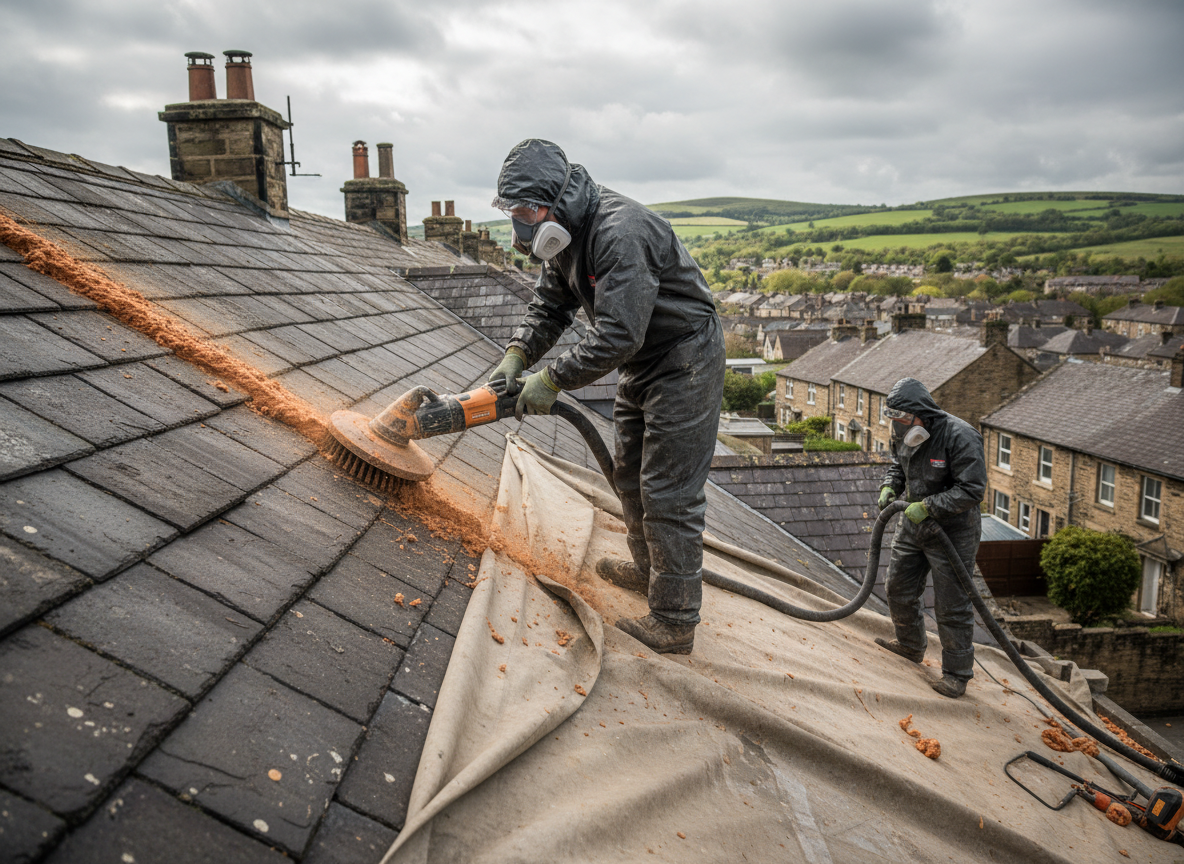
Huddersfield's Victorian and Edwardian stone terraces often received spray foam insulation in the roof spaces during the 2000s push for energy efficiency. Over time the closed-cell material bonds tightly to rafters and felt, and our frequent West Yorkshire rainfall allows condensation to sit against the timber. Removing it requires careful mechanical scraping and solvent application without damaging the original roofing structure that many properties in areas like Lockwood and Paddock still retain.
Homeowners in the HD1 and HD2 postcodes regularly discover the foam has masked leaks from slipped slates or failed flashings around chimneys. Once the foam is gone the true condition of the roof deck becomes visible, often revealing rot that must be treated before any new insulation or ventilation is installed. Work is carried out from inside the loft wherever possible to avoid scaffolding on narrow terraced streets.
Because many of these roofs were never designed with modern ventilation standards in mind, we always reinstate airflow paths after removal. This prevents the same moisture issues recurring and keeps the property compliant with current building regulations for roof voids in exposed northern locations.
Handling Older Stone Properties
Properties built before 1919 in Huddersfield frequently have random stone walls and minimal eaves overhang. Spray foam applied directly to the underside can bridge the damp-proof course line, so removal must stop short of the wall plate and include a clear ventilated gap to allow the masonry to breathe again.
Technician insight
In Huddersfield the thing that catches most people out with roof spray foam removal is how the frequent rain and older stone terraces let moisture sit against the rafters for years under the foam. Homeowners often assume the insulation is still performing when the real issue is hidden condensation along the wall plate in properties around the town centre.
Lockwood Terrace Roof Void
Closed-cell foam had been sprayed across the entire underside of a 1905 stone terrace roof. We found widespread damp staining on the rafters where rainwater had entered through slipped slates and been trapped. After removing the foam we treated the affected timber and added ridge and eaves vents so the loft could dry out naturally.
How it works
- 1
Initial Loft Inspection
We access the roof space from inside the property to assess foam depth, adhesion points, and any visible timber damage caused by trapped moisture.
- 2
Controlled Mechanical Removal
Foam is cut and peeled in sections using specialist tools to avoid disturbing original roofing felt or rafters common in Huddersfield terraces.
- 3
Surface Cleaning and Treatment
Residual adhesive is dissolved and rafters are treated for any early signs of rot before ventilation is restored.
- 4
Final Ventilation Check
Airflow paths are confirmed and any necessary vents added so the roof void meets current standards for the local climate.
Pricing
Price depends on roof size, foam thickness and access difficulty in older terraces; we provide a clear written quote after inspection.