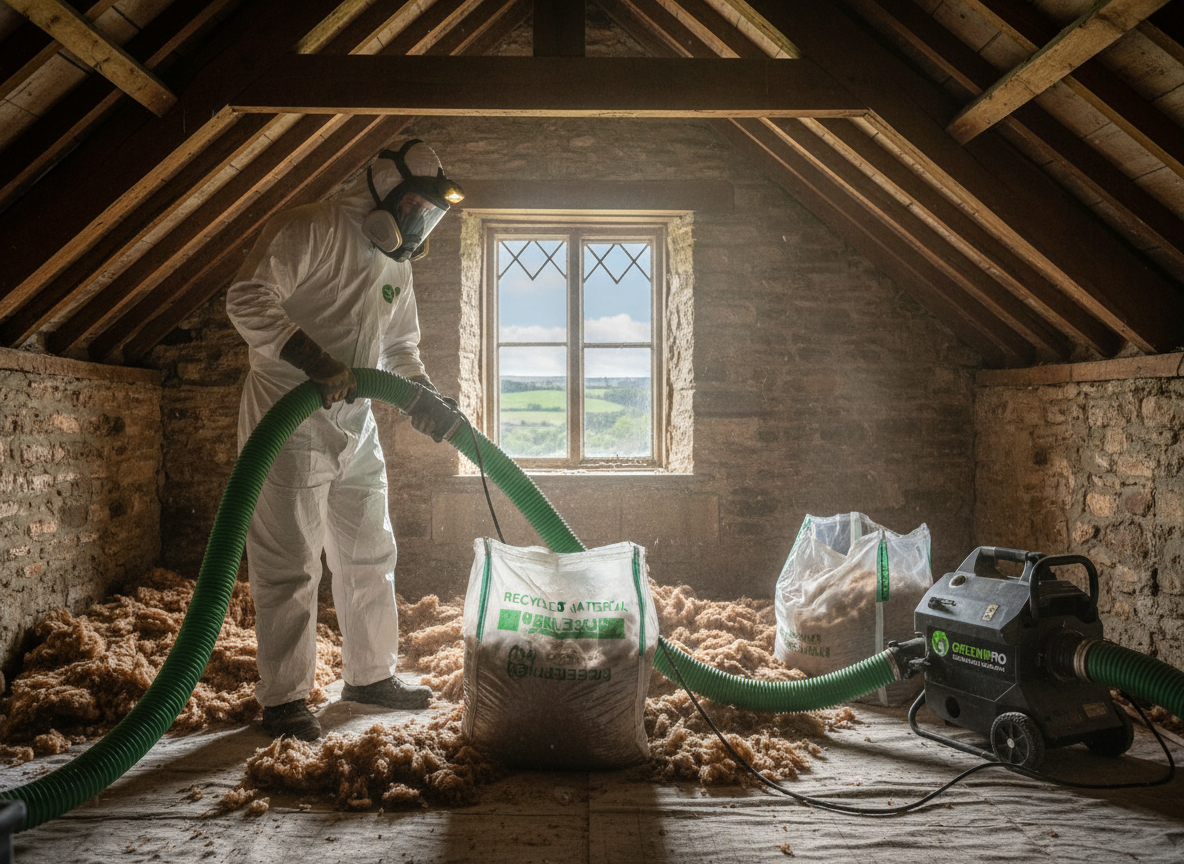
Huddersfield's older housing stock, particularly the stone-built terraces in neighbourhoods like Marsh, Lindley and Paddock, often received spray foam insulation in lofts during the 2000s. The region's frequent rainfall and high humidity mean closed-cell foam can trap moisture against timber joists and stone walls, leading to hidden rot that only appears once the foam is disturbed. Removal requires careful cutting in sections to avoid releasing particles into living spaces below, followed by immediate ventilation checks because West Yorkshire winters drive condensation when temperatures drop sharply after dark.
Many properties around the town centre sit on sloping ground where rooflines meet at awkward angles, making full foam extraction more involved than in newer estates. We bag and remove all material for licensed disposal rather than leaving residue that could affect local waterways through runoff. Homeowners frequently discover that original lathe and plaster ceilings have been compromised, so the work includes temporary protection of floorboards and electrics before any new breathable insulation can be considered.
Access through narrow ginnels common in Huddersfield terraces limits equipment size, so the job often starts with hand tools and dust extraction units set up on the street. Once the foam is gone, we inspect for water staining on rafters caused by the impermeable layer that previously prevented the roof from drying naturally after rain. This step prevents callbacks when owners later install mineral wool or wood fibre alternatives suited to the damp local climate.
Technician insight
In Huddersfield, the thing that catches most people out with environmentally friendly insulation removal is how the damp stone walls in Victorian terraces around the town centre hold moisture once the foam is stripped; if you don't open up the roof for a few days of drying before new insulation, the joists start showing rot within a year.
Marsh Terrace Loft
A homeowner in Marsh reported a persistent musty smell after heavy winter rain. We found closed-cell foam had sealed in condensation against the stone gable. After sectional removal and licensed disposal we left the space ventilated for several days, allowing the timbers to dry before any further work.
How it works
- 1
Initial Assessment
Inspect loft and roof structure in the specific Huddersfield property to map foam coverage and identify any moisture damage in joists or stonework.
- 2
Containment Setup
Seal off living areas with sheeting and set up extraction units to capture dust before cutting begins, especially important in terraced homes with shared walls.
- 3
Sectional Removal
Cut and bag foam in manageable pieces, working around awkward roof angles typical of older West Yorkshire houses while protecting electrics and floorboards.
- 4
Responsible Disposal
Transport all removed material to licensed facilities, ensuring no residue enters local drainage systems common in the hilly Huddersfield terrain.
- 5
Final Inspection
Check for remaining damp or rot, ventilate the space, and advise on suitable replacement insulation compatible with the area's wet climate.
Pricing
Pricing varies by property size, foam thickness and access difficulty through Huddersfield terraces; contact us for a site visit.