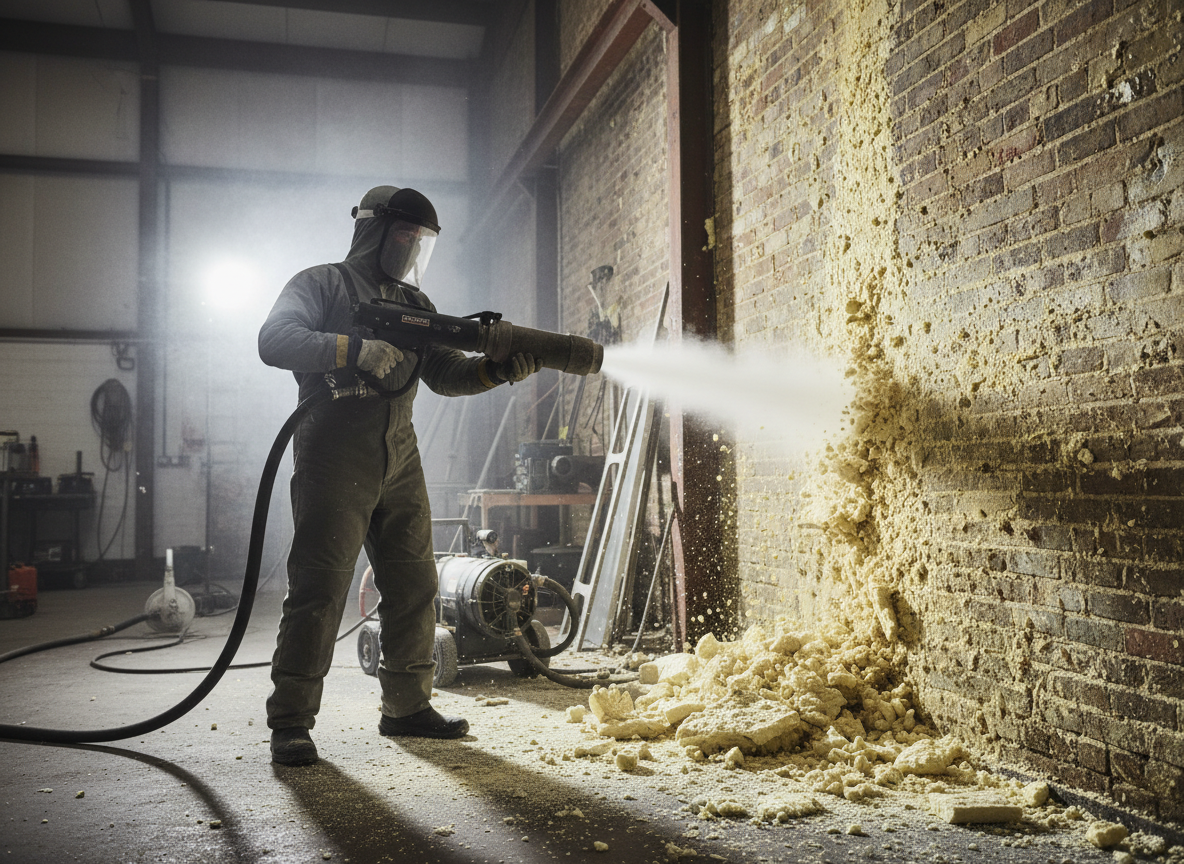
Dry ice blasting removes spray foam insulation by accelerating solid CO2 pellets that sublimate on contact, lifting foam without scraping or solvents that could damage timber joists common in Huddersfield's Victorian and Edwardian terraces. This method suits properties near the town centre where original roof structures often include narrow access hatches and mixed stone-brick construction that traps moisture when traditional removal methods introduce water. In the Huddersfield area the frequent rainfall and underlying clay soils already create damp risks in lofts, so avoiding added liquid keeps rafters dry and reduces follow-on mould issues that appear after wet removal techniques.
Edge cases arise in converted mill buildings around the station and canal where foam was applied over irregular surfaces or previous insulation layers. Pellets must be sized and velocity adjusted to clear foam from behind electrical cabling and pipework without dislodging historic lath and plaster ceilings below. West Yorkshire Building Regulations require ventilation to be restored after foam removal, and dry ice blasting leaves no residue that could block airflow paths in the roof void, helping properties meet current standards without additional strip-out work.
Homeowners often overlook how foam bonds to the underside of slate or tile roofs in older Huddersfield stock; blasting reaches these interfaces cleanly but requires containment sheeting to capture dislodged particles before they enter gutters or downpipes that feed into the town's combined drainage system. The process also demands monitoring of pellet feed rates to prevent thermal shock on metal flashings around chimneys, a detail that matters on exposed roofs facing prevailing winds from the Pennines.
Technician insight
In Huddersfield the thing that catches most people out with dry ice blasting spray foam removal is the narrow, low-ceiling lofts in Victorian terraces near the station where pellet rebound can hit original lath ceilings if the operator does not angle the nozzle correctly, and the damp clay subsoil already pushes moisture upward so any extra humidity from poor containment makes the job longer.
Foam Removal in Central Huddersfield Terrace Loft
Homeowner reported musty smells and reduced airflow in a property off Station Street. Inspection found closed-cell foam fully adhered to rafters and blocking original vents. Dry ice blasting cleared the foam cleanly without wetting the timber. Airflow was restored and no further damp appeared after the work.
How it works
- 1
Initial Loft Inspection
Assess foam depth, substrate condition and access points in the specific Huddersfield property, checking for wiring, pipes and existing damp.
- 2
Site Preparation And Containment
Install floor and wall protection plus extraction equipment to capture CO2 and debris without affecting living spaces below.
- 3
Dry Ice Blasting Application
Apply controlled pellet stream to lift foam from joists and roof deck while monitoring for substrate integrity in older timber.
- 4
Debris Removal And Ventilation Check
Clear all loosened material, verify restored airflow paths and confirm no residue remains on surfaces.
- 5
Final Walkthrough
Review cleaned loft with homeowner and note any follow-up recommendations for the property's roof void.
Pricing
Cost depends on loft size, foam thickness and access constraints; inspection provides an upfront quote.