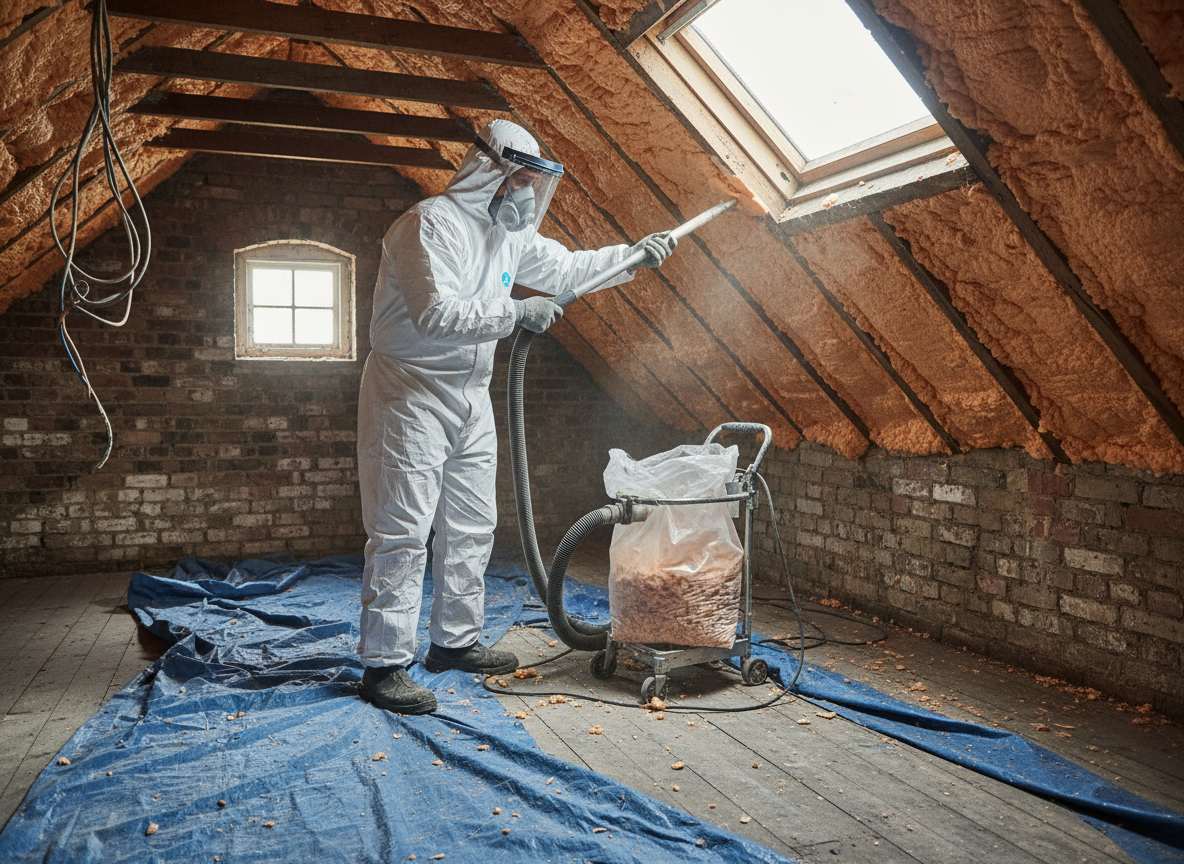
Closed cell spray foam bonds tightly to joists and masonry in Huddersfield terraces built before 1910, often trapping moisture against solid stone walls once temperatures drop below freezing. Removal starts with mechanical scoring to break the closed cell structure without damaging original lath or timber, followed by solvent application that must be controlled because winter humidity in the Colne Valley slows evaporation and raises the risk of residue. Crews working from 12 Station St routinely test substrate moisture levels first because many properties near the canal basin sit on clay that holds water through spring.
Edge cases appear in converted mills around Marsh and Paddock where foam was applied over existing insulation layers, creating hidden pockets that release isocyanates if disturbed. Local building control now requires notification for any removal exceeding 10 square metres because the work can affect ventilation paths required under Part F. Homeowners in the HD1 and HD3 postcodes often discover the foam only after roof leaks appear, since closed cell material masks the water until it reaches the ceiling.
Proper disposal follows Environment Agency rules for hazardous waste generated in West Yorkshire, with offcuts double-bagged and taken to licensed sites rather than general skips. The process leaves the roof void ready for replacement insulation that suits the area's frequent rainfall and temperature swings between the Pennines and the Calder Valley.
Moisture Assessment Before Removal
Before any cutting begins we measure relative humidity in the roof void and check for salts on stonework, because Huddersfield's typical winter rain combined with solid-wall construction means trapped moisture will reappear within months if not addressed during removal.
Technician insight
In Huddersfield the thing that catches most people out with closed cell spray foam removal is how the solid stone walls in pre-1900 terraces hold winter rain long after the foam is gone; if you don't dry the masonry properly before re-insulating, the new material fails within two seasons.
Attic Foam Removal in Lindley Terrace
Homeowner in Lindley called after a persistent musty smell appeared following heavy December rain. We found closed cell foam applied directly to the underside of the stone slate roof, trapping moisture against the gable wall. Sections were removed in controlled stages, the stone was cleaned and left to dry over several days, and the void was handed back ready for breathable insulation.
How it works
- 1
Site Survey and Moisture Check
Technician inspects the property in Huddersfield, records foam thickness, and tests for hidden damp in stone or brick substrates.
- 2
Mechanical Scoring and Sectioning
Foam is scored into manageable sections to minimise dust and prevent damage to original timber or lath common in West Yorkshire terraces.
- 3
Controlled Dissolution and Extraction
Approved solvent softens closed cell bonds; material is removed in sealed bags for licensed disposal.
- 4
Substrate Cleaning and Drying
Remaining residue is cleaned and the void is ventilated to allow drying before new insulation is considered.
- 5
Final Inspection and Handover
Moisture readings are retaken and the customer receives a written summary of findings specific to the property.
Pricing
Cost depends on access, foam depth, and whether hidden damp repairs are needed; 24/7 availability from our Station Street base.